Introduction: The Robots Are Here—But They’re Not What You Think
Picture this: It’s 2025, and you’re walking down a bustling city street. A robot bartender waves at you through a café window, a drone zips overhead to drop off a package, and a humanoid assistant helps an elderly person cross the road. This isn’t a sci-fi movie—it’s everyday life. AI robotics has evolved from clunky prototypes to elegant, integrated companions, reshaping how we live, work, and connect.
But how did we get here? And what does this mean for us? Let’s dive into the world of AI robotics in 2025, where technology doesn’t just mimic humans—it understands them.
1. Healthcare: Robots with a Healing Touch
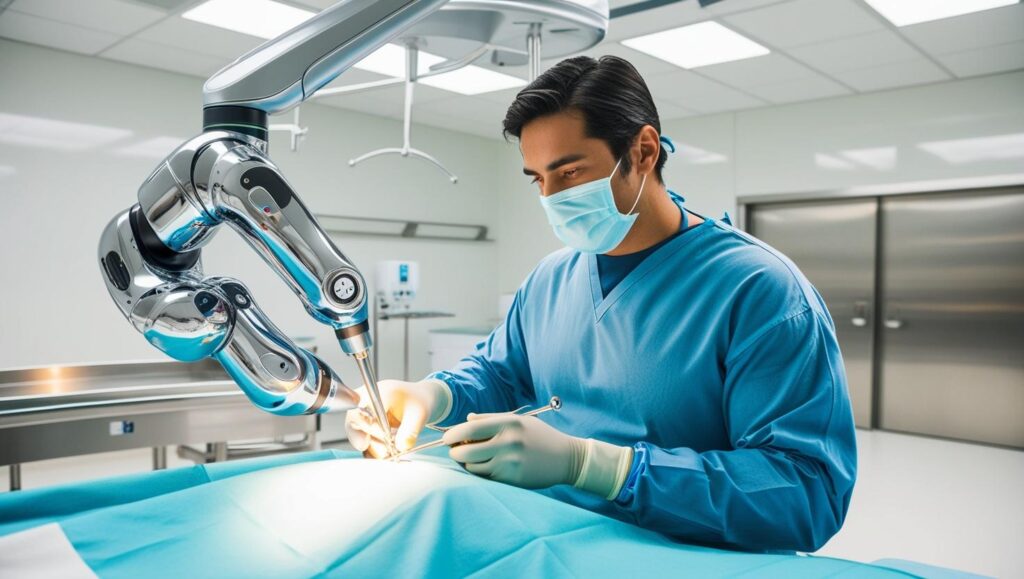
In 2025, robots aren’t just tools in healthcare—they’re collaborators. AI-powered surgical systems, like the next-gen Da Vinci XI, now handle complex procedures with sub-millimeter precision. But the real game-changer? Emotionally intelligent care robots.
Take Miko CareBot, for example. This palm-sized companion sits by a patient’s bedside, monitoring vitals, dispensing medication, and even cracking jokes to lift spirits. Using natural language processing (NLP), Miko detects anxiety in a patient’s voice and responds with calming words or alerts a human nurse. For elderly care, robots like ElliQ 2.0 have become family members, reminding users to take walks, video-calling grandkids, and learning their preferences over time (“Grandma hates broccoli? Noted!”).
But here’s the twist: These robots aren’t replacing doctors or nurses. Instead, they’re freeing up time for medical staff to focus on human-centric tasks—like holding a patient’s hand during a tough diagnosis.
2. Home Sweet (Smart) Home: Robots That Anticipate Your Needs
Remember when “smart homes” meant yelling at Alexa to turn off the lights? In 2025, homes are alive with robots that learn your habits and quirks. Meet Astro HomeBuddy, Amazon’s upgraded home robot. It’s not just a voice assistant on wheels—it recognizes family members by face, remembers where you left your keys, and even detects a burning smell in the kitchen before the smoke alarm blares.
Then there’s FoldiMate Pro, the laundry robot that sorts, folds, and irons clothes (yes, even fitted sheets!). Meanwhile, startups like Nala Robotics are bringing gourmet cooking bots into kitchens. Want sushi tonight? The bot learns your preferred rice-to-fish ratio and crafts it perfectly—no takeout needed.
But the best part? These robots adapt. If you’re stressed, your home bot dims the lights, plays lo-fi beats, and orders your favorite comfort food. It’s like living with a friendly, hyper-efficient roommate who never complains.
3. The Workplace Revolution: Cobots, Not Job-Stealers
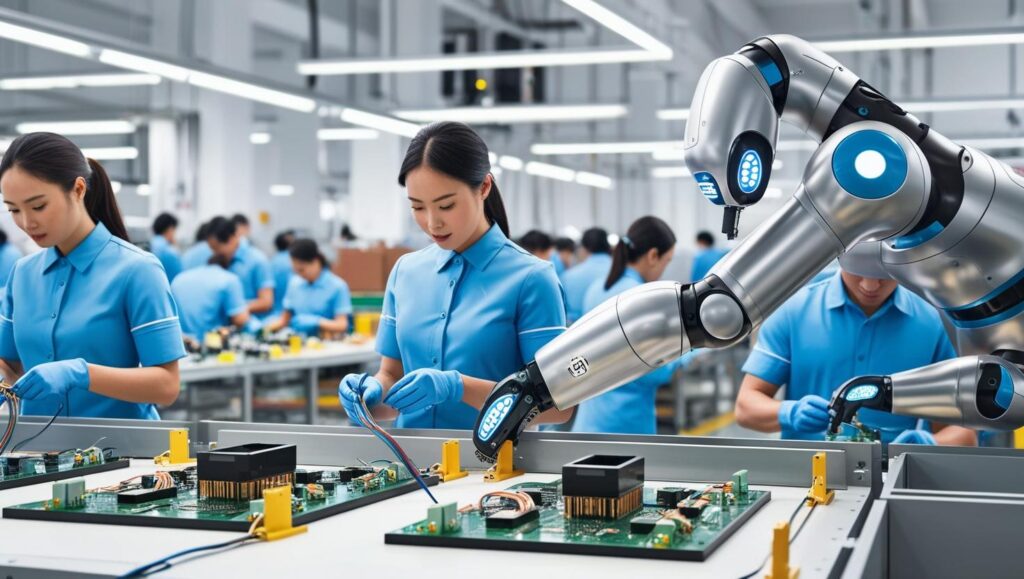
Image: A factory floor where humans and collaborative robots (cobots) assemble products side by side.
The fear of robots “stealing jobs” still lingers, but 2025 tells a different story. Collaborative robots, or cobots, are now teammates rather than replacements. In factories, cobots like Universal Robots UR20 work alongside humans, handling repetitive tasks (welding, lifting heavy parts) while workers focus on quality control and innovation.
Offices have changed too. AI receptionists like Suki by OpenAI greet visitors, schedule meetings, and even detect workplace conflicts by analyzing email tones. Meanwhile, Boston Dynamics’ Spot 4.0 patrols construction sites, inspecting hazardous areas and reducing human risk.
But the biggest shift? Reskilling programs. Companies like Tesla and Siemens now offer free robotics training for employees, ensuring humans stay ahead of the automation curve. As one factory worker put it: “My cobot doesn’t take my job—it makes my job safer and cooler.”
4. Ethics and Emotions: The Rise of “Empathetic AI”
Image: A child interacting with a friendly, cartoon-eyed robot designed to teach social skills.
As robots integrate into daily life, 2025 has sparked a critical question: Can machines understand ethics and emotions? The answer is a cautious “yes.”
Take Amika, an AI tutor robot used in schools. Amika doesn’t just teach math—it notices when a student is frustrated and adjusts its teaching style. It even raises its “eyebrows” (LED lights) to mimic empathy. Similarly, elder care robots are programmed with ethical guidelines: They’ll remind patients to take meds but refuse requests that could harm them (like sneaking extra cookies).
However, challenges remain. In 2024, a viral incident involved a therapy robot accidentally giving harmful advice to a depressed teen. Since then, regulators have tightened AI ethics laws, requiring transparency in how robots make decisions. As Dr. Lena Chen, an AI ethicist, explains: “We’re teaching robots not just to think, but to care—within limits.”
5. The Dark Side: Security, Privacy, and the “Uncanny Valley”
Image: A person looking uneasy as a hyper-realistic humanoid robot smiles at them.
Not everyone is thrilled about our robot overlords—er, helpers. In 2025, debates rage over privacy (can your home robot be hacked?), job security, and the eerie “uncanny valley” effect of humanoid bots.
For instance, Tesla’s Optimus 2.0 looks almost human—but not quite. Its slightly stiff movements and frozen smile unsettle some users. “It’s like talking to a wax figure,” one reviewer shuddered. Meanwhile, hackers have targeted delivery drones, rerouting packages mid-flight. Companies are racing to bolster cybersecurity, but the arms race continues.
Still, most agree the benefits outweigh the risks. As long as humans stay in control, the future looks bright.
Conclusion: A Symbiotic Future
Image: A diverse group of humans and robots working together in a sunny park—planting trees, playing music, and laughing.
By 2025, AI robotics isn’t about machines replacing humans. It’s about partnership. Robots handle the mundane, dangerous, and repetitive, while humans focus on creativity, connection, and compassion.
Sure, there are bumps along the way—ethics debates, tech glitches, and the occasional rogue drone. But when you see a robot helping a farmer plant drought-resistant crops or a child with autism bond with a therapy bot, it’s hard not to feel hopeful.
As we step into this future, let’s remember: Robots don’t dream of electric sheep. They dream of making our lives better. And in 2025, that dream is becoming reality.
Leave a Reply