Tag: AI

  • Breakthrough Scientific Discoveries Revealed in Latest Nature Journal Update

    Breakthrough Discoveries from the Latest Nature Journal: What They Mean for You

    Have you ever wondered how science is quietly changing the world behind the scenes? Every now and then, a scientific journal like Nature drops a new issue, and BAM—our understanding of the universe gets a little clearer. If you’re not a scientist, it’s easy to miss how big these breakthroughs really are. But don’t worry—we’ve broken it down in a way that’s easy, fun, and just the right mix of “Whoa!” and “Wow!”

    We just dug into the new issue of Nature, and trust us, it’s packed with fascinating findings. From the edge of our solar system to the inner workings of the human brain, this update covers it all. So grab a coffee, and let’s take a peek at what’s making waves in the world of science.

    Why Is the Nature Journal So Important?

    Before we dive into the details, you might be wondering: What exactly is the Nature Journal? Simply put, it’s one of the most respected science publications in the world. Scientists from every corner of the globe publish their latest discoveries here, and many of these findings go on to change the way we live, work, and even think.

    Top Scientific Breakthroughs You Need to Know About

    Let’s explore some of the most exciting discoveries featured in the latest issue of Nature:

    1. A New Era for Cancer Treatment

    Could cancer treatment become less harmful and more effective? One new study says yes! Researchers have developed a new way to target and kill cancer cells using the body’s own immune system. Think of it like teaching your immune cells to play detective—they’re trained to find the bad guys (cancer cells) and take them out, while leaving the healthy cells alone.

    The best part? This technique could lead to fewer side effects compared to harsh chemotherapy. While it’s still in testing, it gives real hope to millions around the world.

    2. Closer Than Ever to Finding Alien Life?

    No, we haven’t officially met E.T. yet—but we’re getting closer to understanding where life could exist beyond Earth. Scientists using data from the James Webb Space Telescope discovered new evidence of water vapor and organic molecules in distant exoplanets’ atmospheres.

    Let’s break that down: If a planet has water and the basic building blocks of life, it might just host some form of life—even if it’s microscopic. It’s kind of like finding breadcrumbs and wondering, “Who left these behind?”

    3. Breakthrough in Brain Communication

    Ever wish your brain worked like a supercomputer? In an amazing twist, it turns out we’re starting to understand how the brain rewires itself using tiny electric pulses.

    A new study reveals how cells in the brain communicate and adapt much faster than we previously thought. This insight could unlock better treatments for Alzheimer’s, depression, and even brain injuries. It’s like upgrading your laptop without buying new hardware—just more efficient programming.

    4. Plastic-Eating Enzymes Could Save Our Oceans

    Here’s one we can all get behind: Researchers have made a big leap in creating enzymes that break down plastic. These enzymes are like hungry little Pac-Men, gobbling up plastic waste quickly and efficiently.

    If this tech scales up, we could reduce ocean pollution dramatically. Imagine less plastic washing up on beaches, fewer animals hurt by waste, and a cleaner future for all of us.

    Why These Discoveries Matter to You

    You might be thinking, “Sounds cool, but how does this affect my daily life?” Great question! Science isn’t just for laboratories—it shapes our everyday lives in ways we don’t always see.

    • Improved Healthcare: From cancer treatments to brain therapies, science is building the future of medicine.
    • Environmental Protection: New developments in sustainability could help fight climate change and pollution.
    • Space Exploration: Understanding distant worlds could one day lead to human life beyond Earth—or at least help us care better for this one.

    Let’s Make It Personal: How One Discovery Hit Home

    When I was a kid, my aunt was diagnosed with late-stage cancer. Watching her go through chemotherapy was heartbreaking—the treatments did as much damage as the disease. Back then, we accepted it as the best we had. But reading about these new techniques, I couldn’t help but smile. The idea of patients fighting cancer without losing their hair or strength? That’s not just science—it’s hope.

    Understanding the Science—Without the Jargon

    Not a science expert? No problem. Here’s a quick guide to help you wrap your head around this stuff:

    • Exoplanet: A planet that orbits a star outside our solar system.
    • Enzyme: A type of protein that speeds up chemical reactions—kind of like a microscopic chef in your body.
    • Immune Therapy: A treatment that helps your immune system fight diseases like cancer.

    What’s Next in the World of Science?

    With such thrilling progress being made, you might wonder, “So what’s next?” Well, that’s the beauty of science—it never stops moving forward.

    In the coming months and years, we can expect:

    • More advanced medical breakthroughs with tailored treatments.
    • New ways to clean our planet using bioengineered tools.
    • Deeper insights into space that may change how we view our place in the universe.

    Final Thoughts: Stay Curious

    Science isn’t just about lab coats and microscopes—it’s a never-ending story of discovery, and we’re all part of it. Whether it’s curing diseases, exploring other planets, or saving the environment, these new findings from Nature Journal show that there’s always something amazing around the corner.

    So next time you hear “science news,” take a moment to read past the headlines. There might be something behind those big words that’s going to change your life.

    Let’s stay curious, keep asking questions, and support the people working behind the scenes to build a better tomorrow. 🌍🔬

    Ready to Explore More?

    If this inspired you even a little, why not follow some science accounts on social media or check out educational YouTube channels? You don’t need a Ph.D. to understand the future—just a little curiosity and the willingness to learn.

    Have a favorite science story? Drop it in the comments—we’d love to hear what blows your mind!

    Keywords: Nature Journal, scientific discoveries, cancer treatment breakthrough, plastic-eating enzymes, alien life, James Webb telescope, brain communication research, science news update, medical advancements, environmental science
  • Title: AI Robotics in 2025: A Glimpse into a Future Where Machines Think, Learn, and Care

    Introduction: The Robots Are Here—But They’re Not What You Think

    Picture this: It’s 2025, and you’re walking down a bustling city street. A robot bartender waves at you through a café window, a drone zips overhead to drop off a package, and a humanoid assistant helps an elderly person cross the road. This isn’t a sci-fi movie—it’s everyday life. AI robotics has evolved from clunky prototypes to elegant, integrated companions, reshaping how we live, work, and connect.

    But how did we get here? And what does this mean for us? Let’s dive into the world of AI robotics in 2025, where technology doesn’t just mimic humans—it understands them.

    1. Healthcare: Robots with a Healing Touch

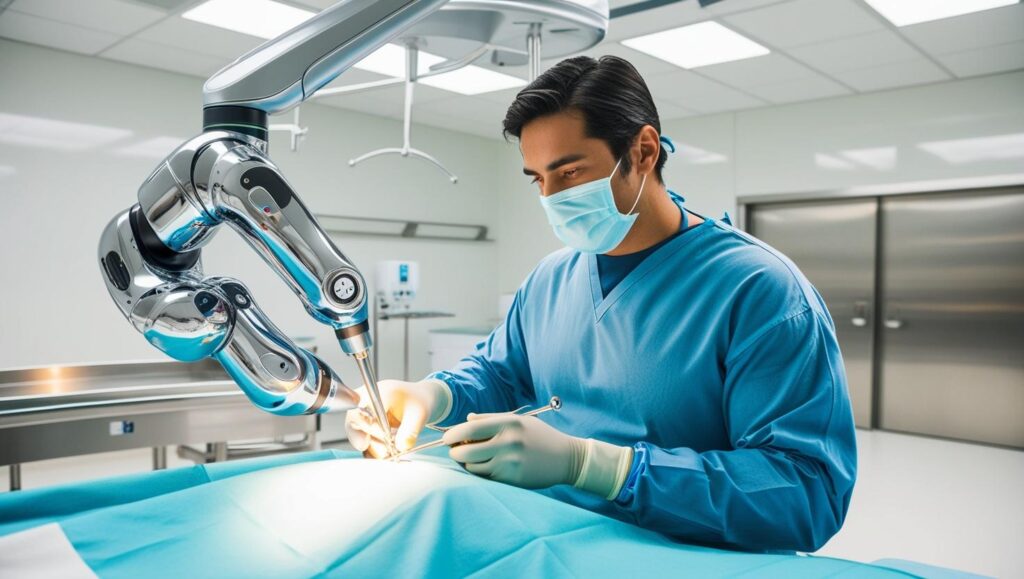
    In 2025, robots aren’t just tools in healthcare—they’re collaborators. AI-powered surgical systems, like the next-gen Da Vinci XI, now handle complex procedures with sub-millimeter precision. But the real game-changer? Emotionally intelligent care robots.

    Take Miko CareBot, for example. This palm-sized companion sits by a patient’s bedside, monitoring vitals, dispensing medication, and even cracking jokes to lift spirits. Using natural language processing (NLP), Miko detects anxiety in a patient’s voice and responds with calming words or alerts a human nurse. For elderly care, robots like ElliQ 2.0 have become family members, reminding users to take walks, video-calling grandkids, and learning their preferences over time (“Grandma hates broccoli? Noted!”).

    But here’s the twist: These robots aren’t replacing doctors or nurses. Instead, they’re freeing up time for medical staff to focus on human-centric tasks—like holding a patient’s hand during a tough diagnosis.

    2. Home Sweet (Smart) Home: Robots That Anticipate Your Needs

    Remember when “smart homes” meant yelling at Alexa to turn off the lights? In 2025, homes are alive with robots that learn your habits and quirks. Meet Astro HomeBuddy, Amazon’s upgraded home robot. It’s not just a voice assistant on wheels—it recognizes family members by face, remembers where you left your keys, and even detects a burning smell in the kitchen before the smoke alarm blares.

    Then there’s FoldiMate Pro, the laundry robot that sorts, folds, and irons clothes (yes, even fitted sheets!). Meanwhile, startups like Nala Robotics are bringing gourmet cooking bots into kitchens. Want sushi tonight? The bot learns your preferred rice-to-fish ratio and crafts it perfectly—no takeout needed.

    But the best part? These robots adapt. If you’re stressed, your home bot dims the lights, plays lo-fi beats, and orders your favorite comfort food. It’s like living with a friendly, hyper-efficient roommate who never complains.


    3. The Workplace Revolution: Cobots, Not Job-Stealers

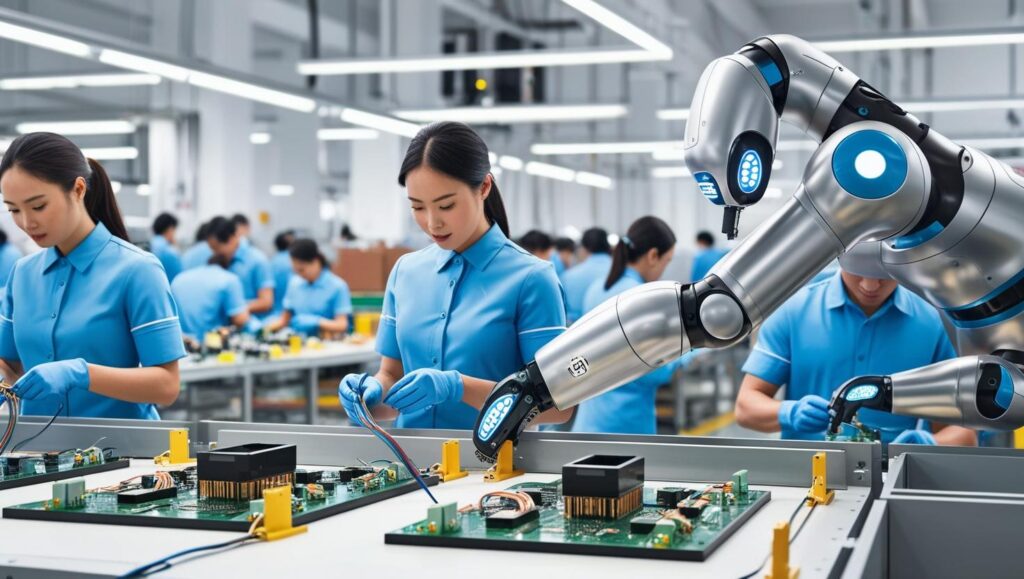
    Image: A factory floor where humans and collaborative robots (cobots) assemble products side by side.

    The fear of robots “stealing jobs” still lingers, but 2025 tells a different story. Collaborative robots, or cobots, are now teammates rather than replacements. In factories, cobots like Universal Robots UR20 work alongside humans, handling repetitive tasks (welding, lifting heavy parts) while workers focus on quality control and innovation.

    Offices have changed too. AI receptionists like Suki by OpenAI greet visitors, schedule meetings, and even detect workplace conflicts by analyzing email tones. Meanwhile, Boston Dynamics’ Spot 4.0 patrols construction sites, inspecting hazardous areas and reducing human risk.

    But the biggest shift? Reskilling programs. Companies like Tesla and Siemens now offer free robotics training for employees, ensuring humans stay ahead of the automation curve. As one factory worker put it: “My cobot doesn’t take my job—it makes my job safer and cooler.”


    4. Ethics and Emotions: The Rise of “Empathetic AI”

    Image: A child interacting with a friendly, cartoon-eyed robot designed to teach social skills.

    As robots integrate into daily life, 2025 has sparked a critical question: Can machines understand ethics and emotions? The answer is a cautious “yes.”

    Take Amika, an AI tutor robot used in schools. Amika doesn’t just teach math—it notices when a student is frustrated and adjusts its teaching style. It even raises its “eyebrows” (LED lights) to mimic empathy. Similarly, elder care robots are programmed with ethical guidelines: They’ll remind patients to take meds but refuse requests that could harm them (like sneaking extra cookies).

    However, challenges remain. In 2024, a viral incident involved a therapy robot accidentally giving harmful advice to a depressed teen. Since then, regulators have tightened AI ethics laws, requiring transparency in how robots make decisions. As Dr. Lena Chen, an AI ethicist, explains: “We’re teaching robots not just to think, but to care—within limits.”


    5. The Dark Side: Security, Privacy, and the “Uncanny Valley”

    Image: A person looking uneasy as a hyper-realistic humanoid robot smiles at them.

    Not everyone is thrilled about our robot overlords—er, helpers. In 2025, debates rage over privacy (can your home robot be hacked?), job security, and the eerie “uncanny valley” effect of humanoid bots.

    For instance, Tesla’s Optimus 2.0 looks almost human—but not quite. Its slightly stiff movements and frozen smile unsettle some users. “It’s like talking to a wax figure,” one reviewer shuddered. Meanwhile, hackers have targeted delivery drones, rerouting packages mid-flight. Companies are racing to bolster cybersecurity, but the arms race continues.

    Still, most agree the benefits outweigh the risks. As long as humans stay in control, the future looks bright.


    Conclusion: A Symbiotic Future

    Image: A diverse group of humans and robots working together in a sunny park—planting trees, playing music, and laughing.

    By 2025, AI robotics isn’t about machines replacing humans. It’s about partnership. Robots handle the mundane, dangerous, and repetitive, while humans focus on creativity, connection, and compassion.

    Sure, there are bumps along the way—ethics debates, tech glitches, and the occasional rogue drone. But when you see a robot helping a farmer plant drought-resistant crops or a child with autism bond with a therapy bot, it’s hard not to feel hopeful.

    As we step into this future, let’s remember: Robots don’t dream of electric sheep. They dream of making our lives better. And in 2025, that dream is becoming reality.